Mountain Hunting
How to Test Your Uphill Muscular Endurance for Mountain Hunting
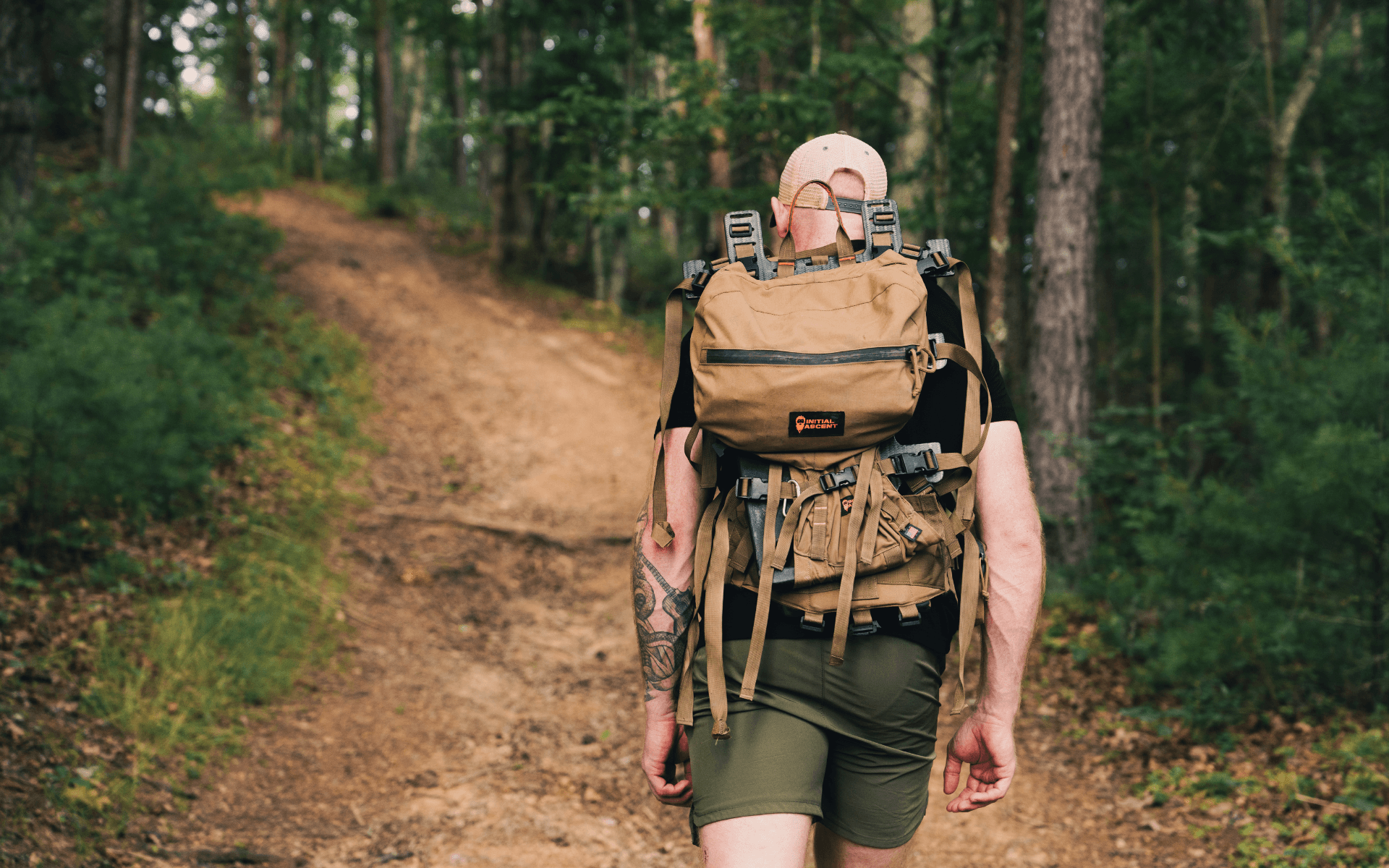
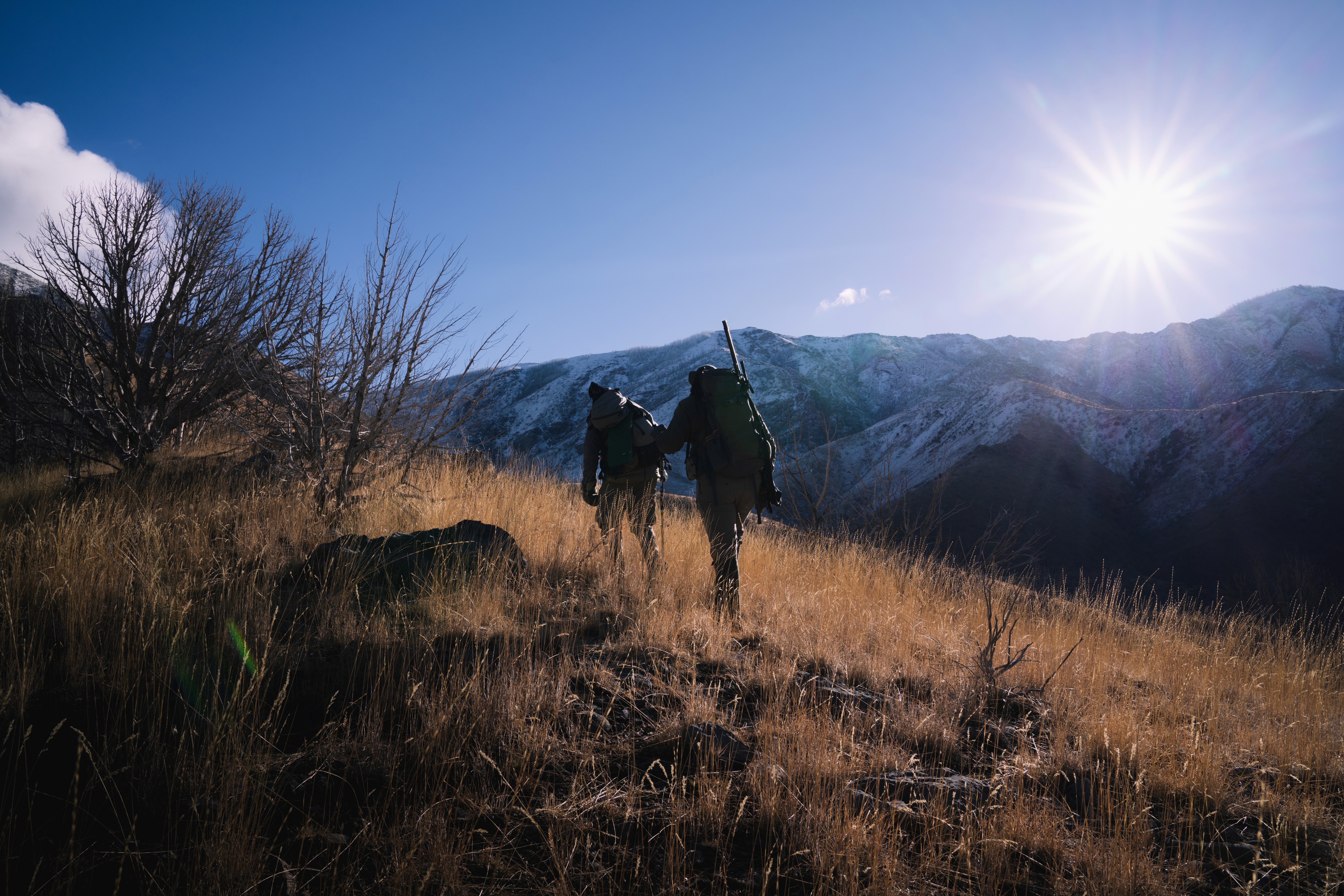
Mountain hunting is a lot of things. It’s an adventure and for many hunters it’s a rite of passage. It’s a challenge of skill, a test of will, and, oftentimes, an experience that at least borders the spiritual. It is also an endeavor that requires a huge amount of muscular endurance.
It’s tough to build your uphill muscular endurance to the right levels without knowing where you currently stand and what kind of training will move the needle for you.
So, let’s learn you up on how to test your uphill muscle endurance for mountain hunting.
Why Uphill Muscular Endurance Matters for Mountain Hunting
We ought to start by defining muscular endurance before we talk about why it’s so important for uphill hunting. It’s the ability to sustain muscular contractions, or hold position, without fatigue. As mountain hunters, that definition hits us in a couple ways. First, we need our legs to keep driving us uphill (and downhill) during long hikes. That won’t happen without lower-body muscular endurance. Second, we need our postural muscles to hold position while we carry weight in our packs or in our vests. If your upper-body can’t support the weight over time, you’ll have a real hard time with your spine, hips, and shoulders. Not to mention it will steal your focus, slow you down, and cause the rest of your body to tire much faster by affecting your breathing.
What Gives Hunters Muscular Endurance in Steep Terrain?
A few things work together to give us muscular endurance for steep terrain. A solid aerobic base sets the foundation. It delivers fuel over the long haul, removes and recycles metabolic byproducts, and allows us to recover quickly from hard climbs. We follow that up with relative strength and strength endurance. Relative strength is the maximal amount of strength you produce relative to your body weight. When you’re strong relative to how much you weigh, everything you do costs you less energy. Strength endurance is the ability to use your relative strength over time during repeated efforts. Now, this sounds a whole lot like muscular endurance, but it differs because it’s more about training your nervous system for output over long periods. Think of it more as a whole body thing rather than just what’s happening in the working muscles. Good joint mobility is also a huge deal for us. Being mobile makes us efficient movers. Moving efficiently saves us a whole lot of energy.
Then, there is the actual training for repeated muscular contractions. It’s important to lay the foundation with aerobic training, relative strength, strength endurance, and joint mobility but there is no way around doing the continuous work to build muscular endurance.
There are strength training and conditioning methods that build muscular endurance. On the strength training side of things, isometric holds, tempo strength training, high-intensity continuous training (HICT), and regular ol’ high-volume resistance training (sets of 12+) all work to build aspects of muscular endurance.
Technically, each kind of aerobic conditioning builds muscular endurance when well-planned and well-executed. Each builds the ability to sustain muscular contractions across the spectrum of movement intensity. Each teaches the body to use fuel to contract muscles in a different way. So, we use all of them. That said, we gain the most ground by building a huge aerobic base with general Zone 1 and Zone 2 training, progress that into specific uphill Zone 2 training, then layer specific Zone 3 and Zone 4 training as the icing on top. (We also, at times, do Zone 5 training in the form of V02max intervals, but this is more about oxygen delivery than muscular endurance.)
Specific conditioning looks like uphill work — with a pack for those who are ready — sustained at the correct training intensities. Speaking of specificity, let’s talk about what constitutes an uphill muscular endurance test.
What Is an Uphill Muscular Endurance Test?
An uphill muscular endurance test is an assessment of your ability to sustain work with the muscles that drive you uphill while maintaining good posture. If you want to nail it down with brass tacks, it’s how to measure uphill endurance. That’s probably the simplest way to say it. However, we need to break out for those uphill drive muscles and the postural muscles that support you while you work.
Let’s talk about the tests that teach us about our uphill drive and our posture while we do the driving.
Uphill Endurance Tests: The 10-Minute Step-up Test, The 2-Minute Plank, and The Farmer’s Walk for Time
We’ll start with the 10-Minute Step-up Test because it gives us direct uphill performance metrics. Then we’ll move on to the postural tests. We’ll walk through how to perform each test and how to interpret the results.
The 10-Minute Step-up Test
It’s a simple-to-execute uphill pack test that assesses your ability to sustain hard, uphill-like work overtime. It’ll give you insight into where your legs, your lungs, your postural control, and your head is currently.
Equipment:
12-14-inch box
Your pack, loaded with 20% of your body weight.
Chest strap heart rate monitor.
A rep-counting app on your phone.
Instructions:
Strap on your heart rate monitor and sync it with your watch or phone app, set up your box, and shoulder your pack. Bring up your rep counter, start your timer, and get to stepping up. You’ll move at your fastest sustainable pace for 10 minutes. It’s intelligent to build speed as you get going through the first thirty seconds to one minute. Don’t tear out like a house on fire or you’ll burn yourself out. You should, however, be working at a sustained 7 to 8 out of 10 intensity once you get going. You must alternate legs each step. A step-up counts as a rep when you have both feet on the box and the stepping leg is fully locked out at the hip and knee. At the end of the 10 minutes, record your max heart rate and average heart rate. Check your rep counter for total reps completed.
Evaluation:
Here’s a tiered evaluation of the test based on reps completed. We’ll start with the men’s standards then the women’s.
Men:
>249 reps = Needs work.
250 - 299 = Baseline.
300 - 399 = Strong.
400+ = Elite.
Women:
>175 = Needs work.
176 - 249 = Baseline.
250 - 349 = Strong.
350+ = Elite.
You’re lacking muscular endurance and strength endurance if you’re at the Needs Work standard. You likely also need aerobic capacity and aerobic power work to bring up your conditioning.
If you’re at the Baseline standard, you, well, have a solid base. You could go on a mountain hunt and likely not struggle. That said, the cost of the hunt on your body will be higher than necessary. You need more legs and likely more lungs.
The Strong range is solid. You likely have good conditioning, good strength endurance, and good muscular endurance. There’s definitely room for improvement with training, but you’re pretty well conditioned for uphill climbing during Western hunts.
The Elite standard means you’re ready to kick some ass. Your aerobic conditioning is solid; your strength endurance is solid; your muscular endurance is solid; and you’re efficient under load. From a sustained uphill hiking perspective, you’re likely ready to take on most hunts in the world.
We’re looking at a few things when we review the heart rate data. The main thing we’re examining is cost vs output. Most folks' average heart rate will hang around anaerobic threshold, the line between Zone 3 and Zone 4, during this test if they’re working appropriately hard. They are leaving way too much in the tank if they don’t elevate their heart rate to that point. We want to see that a hunter can get their heart close to threshold, maintain it there, and maintain a high work rate. If they can, their aerobic power, muscular endurance, strength endurance, and efficiency under load are each in a good place for sustained uphill climbs. If a hunter’s heart rate gets to the appropriate level but they can’t sustain work there, they are lacking uphill fitness.
If you want to get bonus points for this test, do it with a partner and have them track the amount of steps you do per minute, then tally them. If you track only the total reps, you can average your work rate per minute across the test. However, if you track your actual work rate per minute by having someone count reps per minute, you can determine where you have a drop in work rate. Say you do 30 steps per minute for the first 5 minutes, then in minute 6 you drop to 25. Once you hit minute 7, you only hit 20 steps per minute for the rest of the test. You’ve noted the point where there is a significant drop in your output. This gives you a means to measure progression during a retest. It also gives you the opportunity to probe the limiting factors.
Then, layer your subjective experience on top of the numbers. Let’s go back to minute 6 and the work rate dropoff. If your legs died, you likely need to work on strength endurance and muscular endurance. If it felt like your heart and lungs were holding you back, you likely need aerobic work at both ends of the spectrum, starting with capacity work. If you just felt completely crushed, you’re likely just out of shape and need to start with the basics of strength capacity and aerobic capacity and do a lot of building — and you need to give yourself a lot of time to do it.
The 2-Minute Plank
This tests your general core strength and muscular endurance. Each is important for maintaining an upright posture and good breathing during hard uphill climbs.
Equipment:
Your body. (Very important.)
A stopwatch or stopwatch phone app.
The floor. (Also very important.)
Instructions:
Set up in the up push-up position with your stopwatch under your face. Start the timer once you’re locked into position, and hold the plank for as long as you can. (More on how long to hold it in the evaluation section.
Evaluation:
You’re lacking core strength and endurance If you can’t hold that plank for at least two minutes. That’s why it’s called the 2-Minute Plank test. You’re also likely lacking general upper-body strength and endurance. The solution is simple. You need to follow a smart strength training program that includes core “anti-movements.”
The Farmer’s Walk for Time
This one here assesses your general strength, your grip strength, and the muscular endurance of your upper-body postural muscles. Each is associated with keeping your body in a good position as you move under load.
Equipment:
Two dumbbells or kettlebells that cumulatively add up to 75% of your body weight. (For example, if you weigh 200 pounds, you’ll need two, 75-pound weights.)
Two cones or an equivalent to mark distance.
A stopwatch or stopwatch phone app.
Instructions:
Set up your cones or whatever you’re using as markers 25 yards from each other. Start your stopwatch, pick up your weights, and start walking, weaving figure-8 patterns around the cones. Keep going until your grip fails.
Evaluation:
The goal is to carry the weights for at least 90 seconds. Your general strength, grip strength, and postural muscular endurance are in a good place if you can do that. If you can’t, you need grip and strength work — a solid amount of each. Now, if your grip fails before you get to 30 seconds, you have a big grip deficit and really need to spend some time working on it. A poor grip causes problems the whole way up the chain. The good news is that the fix is simple. Consistently doing farmer’s carries — heavy for short distances, light for long distances — will bring your grip strength up in a hurry, while also improving your postural muscular endurance.
When to Re-Test Your Uphill Muscular Endurance
Give it 12 to 16 weeks of consistent training. You’ll need that amount of time to truly see if your uphill performance metrics are moving one way or the other. Test sooner than that and you’ll likely won’t learn anything useful. Wait longer than that and you’ll miss the opportunity to make any necessary adjustments.
Recap Before You Test Your Uphill Hunting Fitness
Muscular endurance is the ability to sustain muscular contractions, or hold position, without fatigue. We need it in the lower-body and in our postural muscles for uphill hiking with a loaded pack. We can train for it with various strength training methods and aerobic conditioning methods. And we test it by replicating hard, uphill loaded hikes to stress our legs and our posture. Baseline core and postural muscular endurance is also huge for keeping us upright and breathing efficiently. So, we test it, too. Work the 10-Minute Step-up Test, the 2-Minute Plank Test, and the Farmer’s Carry for Time into your yearly rotation. Then train consistently for 12 to 16 weeks between tests. This is a solid formula that builds your uphill stamina for hunting.
—-
Want to test each aspect of your hunting fitness? Click the link below to download The Hunter's Field Test for free and put yourself through the self-assessment.
Click >>> The Hunter's Field Test