

Fitness Tips
Muscular Endurance Training Is Controversial Right Now. It Shouldn't Be.
By: Jordan Wilcher
If you’ve been following along in the endurance world, you may have noticed recently that muscular endurance training has been a hot button for the majority of this year. This is largely due to some spectacular race results particularly, at UTMB (the most competitive ultra-marathon in the world) where Ruth Croft and Tom Evans took the top podium spots. Each mentioned how weighted hiking was a huge part of their training and a big factor in their success. Their statements created controversy. It seems that coaches who didn't have athletes podium at the UTMB had a hard time accepting that Crofts’s and Evans’s muscular endurance training methods had such a big impact on their success. It’s been the topic of much discussion since, with coaches questioning if muscular endurance training is effective.
Now, if you have been training with us for any measure of time, you know that we have programmed muscular endurance oriented training for years, not knowing some day this would be such a buzz worthy topic in the training world. From a practical perspective, muscular endurance makes a lot of sense for mountain hunters and endurance athletes, since the overarching goal is to improve fatigue resistance both locally (muscles) and globally (entire body).
Over the years, Scott Johnston at Evoke fitness (Croft’s and Evans’s coach) has written several articles on the how and why of this training as well. That being said, the origins of muscular endurance methods like high intensity continuous training (more on HICT later) are certainly not rooted in present day North America. It was initially Val Nasedkin who popularized HICT training. Nasedkin then influenced several big name coaches in performance training, including Cal Dietz and Joel Jamieson. Pardon the brief history lesson, but with so many opinions being thrown around on this topic, it is important to look in the rearview mirror a little bit. It helps us answer the question: Why do we care, and why should we care, at all about any of this? The answer is simple. Coaches like Nasedkin, Dietz and Jamieson trained athletes that needed results. And they did so far before clickworthy fads and live streamed races came into conception. This brand of muscular endurance training works when it matters.
With that out of the way lets dig into the training a little bit.
Muscular endurance training is designed to improve fatigue resistance, locally and globally. It has an emphasis on local tissue adaptation, hence muscular endurance training. However, global adaptations can’t be excluded. Earlier, I mentioned HICT. It’s a method we employ to increase the oxidative capacity of fast twitch muscle fibers. This improves their aerobic function, and in the end, their endurance. This training involves sets of 10+ minutes using a moderately heavy load and forceful repetitions done every 4 - 8 seconds. Heavy(ish) loads and snappy repetitions are necessary for recruiting fast twitch fibers. It’s also important that movement quality remains high throughout these sessions.
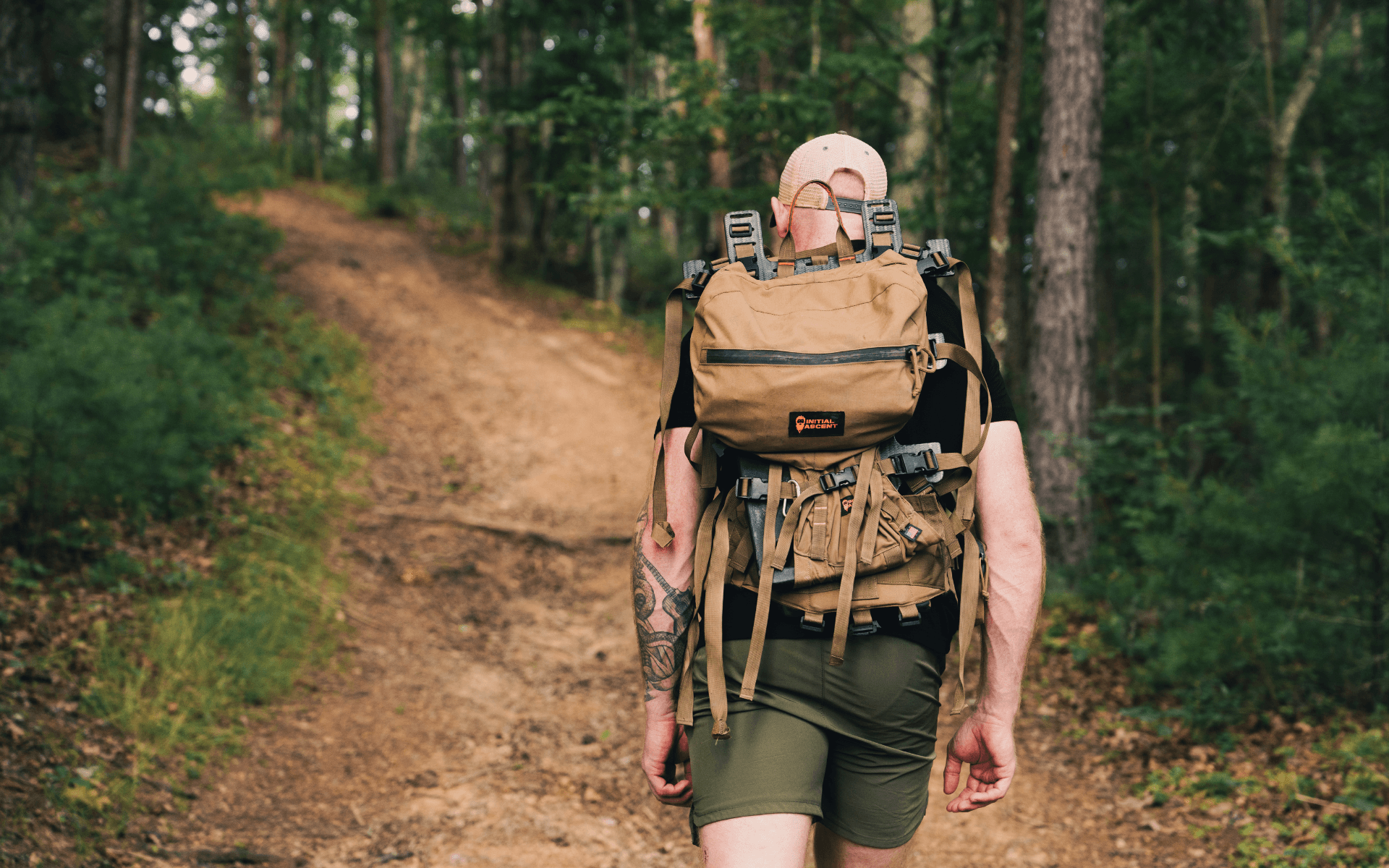
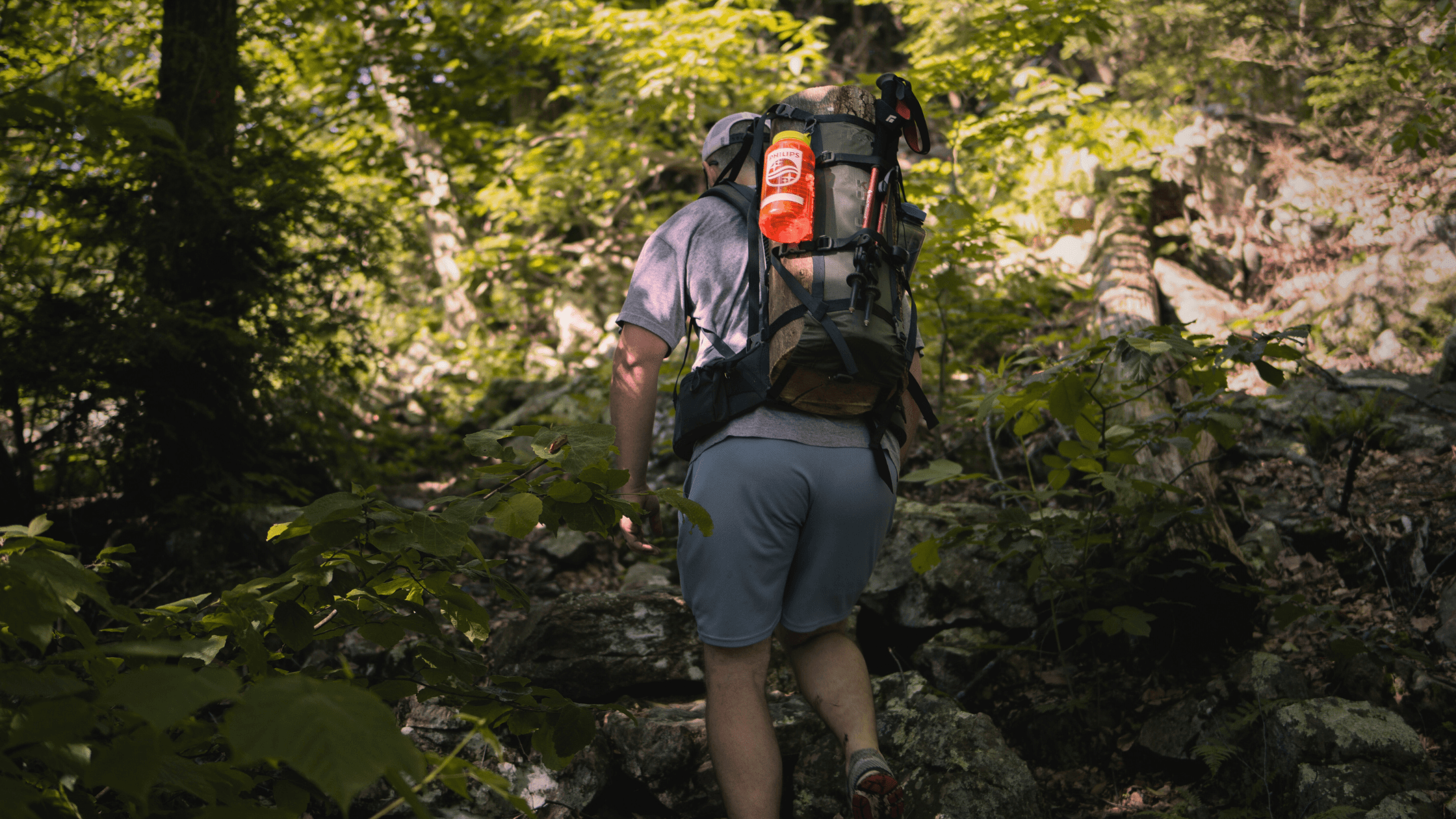
We also utilize long duration uphill training to improve muscular endurance. Ideally, this is done outdoors on terrain, but can also be done on an incline treadmill or stair climber. Load comes in many forms and can be achieved via weighted pack or just by degree of incline. It is important to understand from a coaching perspective that load is relative to the person and a one size fits all approach can result in diminishing returns. The load, and duration, must match the person’s current fitness level and capabilities.
These sessions are typically done somewhere near the top of traditional zone 2 training, or as fast as you can go and maintain a conversational pace. Typically, I like to start programming these sessions in the 20-30 minute range. This helps ensure people don’t go out too hard and treat these like max effort sessions. This aspect of moderate cardiovascular intensity with emphasis on loading lower extremities is a key component when we talk about some of the global benefits of muscular endurance training. Intentionally avoiding glycolytic training and raising lactate threshold is extremely desirable for those of us spending long days in the mountains as we want our biggest power band to be the one that utilizes the least amount of available energy by way of our fat stores. We want to improve how we use fat for fuel before we intentionally work at higher intensities to improve how we use carbs for fuel.
You may notice some similarities in both of these forms of training- they utilize rather continuous and largely concentric movements under load. It is important to point out that we do not employ any weighted running or weighted downhill work as the muscle damage and propensity for injury with these modalities far outweigh any possible benefit. At its core this training is really pretty simple: We are introducing a form of stress to which the body will adapt so that muscles get better at sustaining contractions and the body gets better at fueling those muscles.
Circling back to the controversy over whether or not this training “works.” It’s a little puzzling to me. Over the years, we have employed various testing methods to determine if people improve at a given task. An example would be a step test with a pack. Granted utilizing something like a local hill etc is preferred, a step test is a universally available method. What we found repeatedly was that people were able to achieve more steps in a given amount of time and typically also at a lower HR than their initial testing. We still use a variation of the step test, but we have somewhat moved away from the step test due to the demonstrably predictable outcomes this training achieves, and now favor more real world training or outcomes reported by clients as a proxy for gains in muscular endurance. Outcomes largely revolve around going faster, farther or both and that is generally the goal of training: To have a higher output at less cost to the body.
If you work with us, simply do the work as programmed and the results will follow.
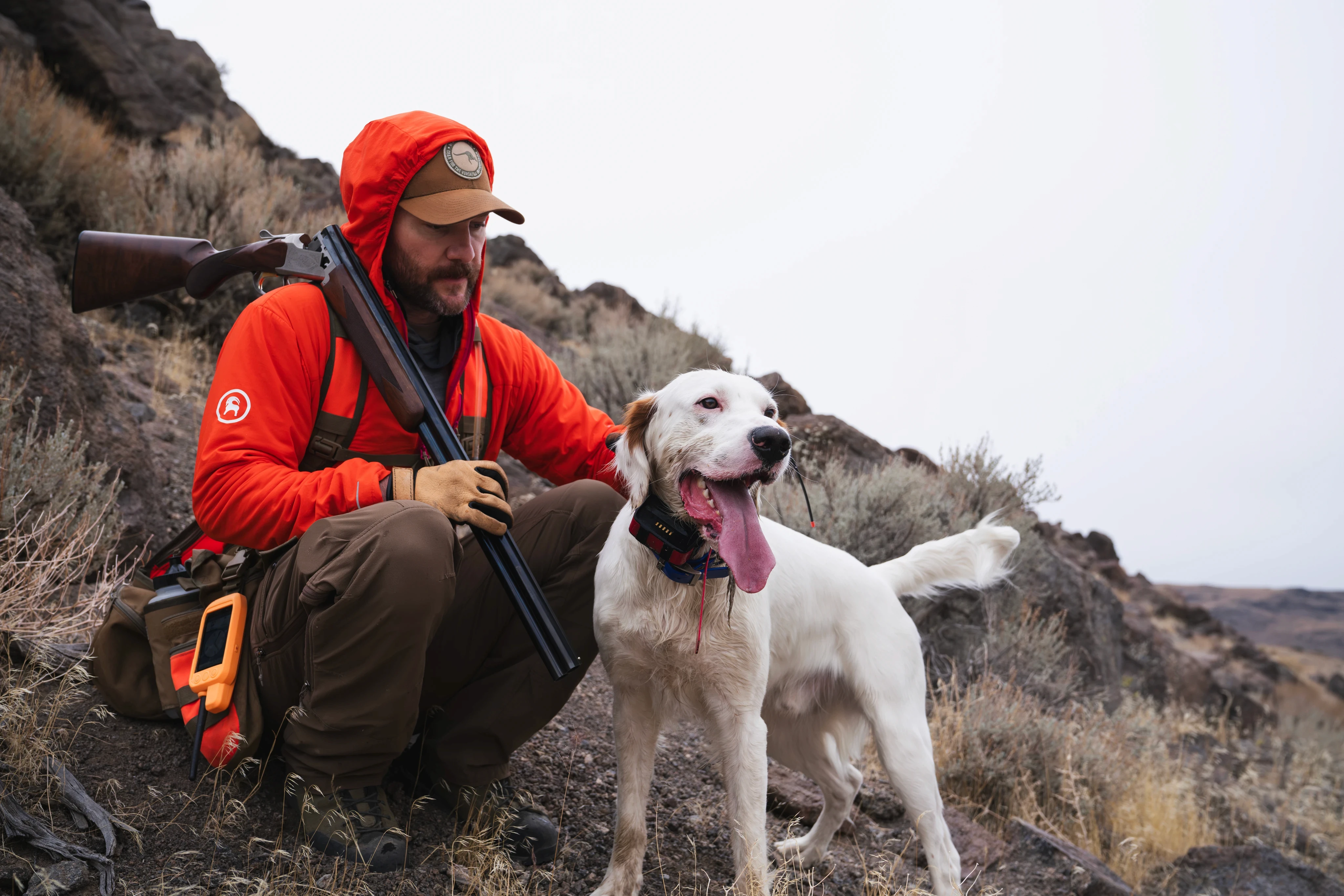
Jordan was born and resides in Nevada. He is an assistant coach at Packmule in addition to working as an RN. Jordan has a curiosity which leads him to a constant pursuit of knowledge in his interests. He enjoys adventures with his family and anything that involves bird dogs or fly rods.
Recent posts
Related Articles

Testing and Assessments
Feb 18, 2026
Do You Know How Much Weight You Should Carry? Determining Your Safe Pack Weight in 10 Minutes
Picture this: You’ve just finished skinning and quartering a bull elk you’ve worked just about every part of your ass off to kill. Now, you have some roller coaster miles ahead of you. The first stretch of that roller coaster is a steep uphill stretch. Then you have yourself a spicy descent before you hit another long uphill, march. You grab your pack and have a look at the meat as it hangs in game bags; you want to get it all back to the truck as quickly and in as few trips as possible. But there’s a problem — you don’t know how much you should load into your pack at one time.

Testing and Assessments
Feb 18, 2026
Do You Know How Much Weight You Should Carry? Determining Your Safe Pack Weight in 10 Minutes
Picture this: You’ve just finished skinning and quartering a bull elk you’ve worked just about every part of your ass off to kill. Now, you have some roller coaster miles ahead of you. The first stretch of that roller coaster is a steep uphill stretch. Then you have yourself a spicy descent before you hit another long uphill, march. You grab your pack and have a look at the meat as it hangs in game bags; you want to get it all back to the truck as quickly and in as few trips as possible. But there’s a problem — you don’t know how much you should load into your pack at one time.

Testing and Assessments
Feb 18, 2026
Do You Know How Much Weight You Should Carry? Determining Your Safe Pack Weight in 10 Minutes
Picture this: You’ve just finished skinning and quartering a bull elk you’ve worked just about every part of your ass off to kill. Now, you have some roller coaster miles ahead of you. The first stretch of that roller coaster is a steep uphill stretch. Then you have yourself a spicy descent before you hit another long uphill, march. You grab your pack and have a look at the meat as it hangs in game bags; you want to get it all back to the truck as quickly and in as few trips as possible. But there’s a problem — you don’t know how much you should load into your pack at one time.

Testing and Assessments
Feb 10, 2026
How Hunters Should Test Their Mobility
The following is an excerpt from the upcoming The Hunter's Guide to Uphill and Downhill Training. I'll be releasing more excerpts in the coming weeks and opening up registration for a pre-sale list with sweet bonuses. Mobility, a.k.a. movement capacity, is misunderstood and under trained in the hunting fitness world. Good movement begins with understanding your current mobility needs. You have to test to get a handle on your current needs. Otherwise, you're firing blanks into the dark. Here's a rundown to how we approach movement testing straight from the book.

Testing and Assessments
Feb 10, 2026
How Hunters Should Test Their Mobility
The following is an excerpt from the upcoming The Hunter's Guide to Uphill and Downhill Training. I'll be releasing more excerpts in the coming weeks and opening up registration for a pre-sale list with sweet bonuses. Mobility, a.k.a. movement capacity, is misunderstood and under trained in the hunting fitness world. Good movement begins with understanding your current mobility needs. You have to test to get a handle on your current needs. Otherwise, you're firing blanks into the dark. Here's a rundown to how we approach movement testing straight from the book.

Testing and Assessments
Feb 10, 2026
How Hunters Should Test Their Mobility
The following is an excerpt from the upcoming The Hunter's Guide to Uphill and Downhill Training. I'll be releasing more excerpts in the coming weeks and opening up registration for a pre-sale list with sweet bonuses. Mobility, a.k.a. movement capacity, is misunderstood and under trained in the hunting fitness world. Good movement begins with understanding your current mobility needs. You have to test to get a handle on your current needs. Otherwise, you're firing blanks into the dark. Here's a rundown to how we approach movement testing straight from the book.

Fitness Tips
Feb 8, 2026
How to Train for Performance Now so You can Walk Mountains When You’re 85
There’s a lot of biohacking nonsense floating around about training for longevity. The truth is simpler. Intelligently designed fitness training is longevity training. You don’t need to sun your butthole or face east while screaming into the wind, or whatever silly shit influencers would have you do. What you truly need to do is consistently train and eat in a way that’s sustainable while moving your fitness forward. It is simple, but it’s not always easy. And it begins with getting your head on straight.

Fitness Tips
Feb 8, 2026
How to Train for Performance Now so You can Walk Mountains When You’re 85
There’s a lot of biohacking nonsense floating around about training for longevity. The truth is simpler. Intelligently designed fitness training is longevity training. You don’t need to sun your butthole or face east while screaming into the wind, or whatever silly shit influencers would have you do. What you truly need to do is consistently train and eat in a way that’s sustainable while moving your fitness forward. It is simple, but it’s not always easy. And it begins with getting your head on straight.

Fitness Tips
Feb 8, 2026
How to Train for Performance Now so You can Walk Mountains When You’re 85
There’s a lot of biohacking nonsense floating around about training for longevity. The truth is simpler. Intelligently designed fitness training is longevity training. You don’t need to sun your butthole or face east while screaming into the wind, or whatever silly shit influencers would have you do. What you truly need to do is consistently train and eat in a way that’s sustainable while moving your fitness forward. It is simple, but it’s not always easy. And it begins with getting your head on straight.

Testing and Assessments
Feb 18, 2026
Do You Know How Much Weight You Should Carry? Determining Your Safe Pack Weight in 10 Minutes
Picture this: You’ve just finished skinning and quartering a bull elk you’ve worked just about every part of your ass off to kill. Now, you have some roller coaster miles ahead of you. The first stretch of that roller coaster is a steep uphill stretch. Then you have yourself a spicy descent before you hit another long uphill, march. You grab your pack and have a look at the meat as it hangs in game bags; you want to get it all back to the truck as quickly and in as few trips as possible. But there’s a problem — you don’t know how much you should load into your pack at one time.

Testing and Assessments
Feb 10, 2026
How Hunters Should Test Their Mobility
The following is an excerpt from the upcoming The Hunter's Guide to Uphill and Downhill Training. I'll be releasing more excerpts in the coming weeks and opening up registration for a pre-sale list with sweet bonuses. Mobility, a.k.a. movement capacity, is misunderstood and under trained in the hunting fitness world. Good movement begins with understanding your current mobility needs. You have to test to get a handle on your current needs. Otherwise, you're firing blanks into the dark. Here's a rundown to how we approach movement testing straight from the book.