

PackMule
How to Beat Aerobic Deficiency Syndrome
You’re being sold a myth, a lie. Here it is:
You’re just not working hard enough; if you work harder, and just do a lot more of that hard work, you’ll be ready for hunting season, to haul an elk over them their mountains where Uncle Rico threw that gaht dang football. But it just isn’t true.
You’re not as fit as you want to be because you likely have Aerobic Deficiency Syndrome – something that ails a lot of backcountry, upland, and mountain hunters.
We’ll talk about what it is, why you probably have it, and what to do about it.
What is Aerobic Deficiency Syndrome?
Aerobic deficiency syndrome is self-descriptive – it is the outcome of a deficient, underdeveloped aerobic system. Those afflicted do not have efficient aerobic pathways, so they are far too reliant on their anaerobic energy systems. (We’ll talk about that in more detail.) And it looks a lot like this…
…as soon as the person starts moving, their heart rate jumps
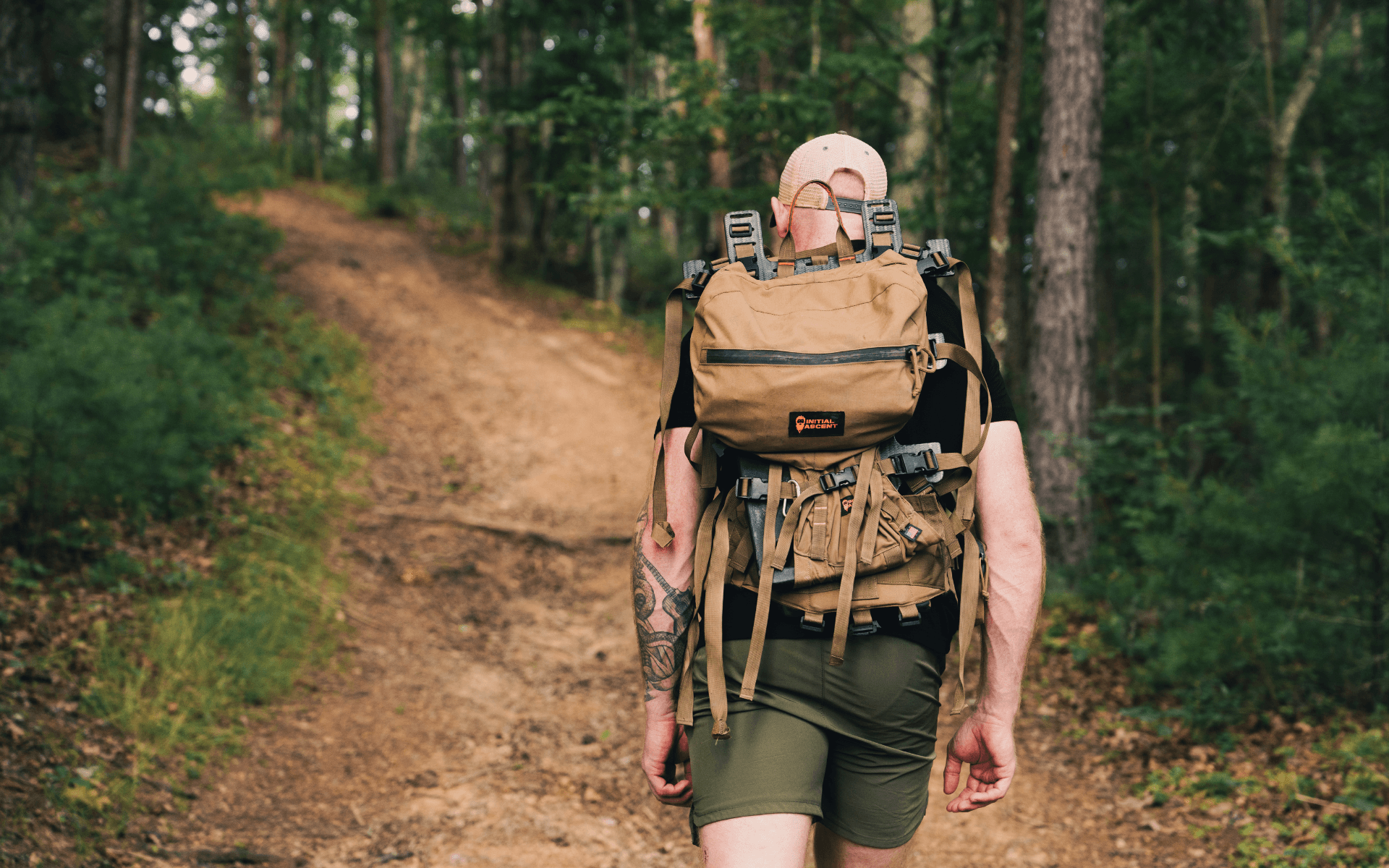
…they have to move at a painfully slow pace to keep their heart rate down into Zone 2 while rucking, running, or hiking
…they have good energy for the first day or two of a hunt, then they are tanked for the rest of the hunt
If this sounds like you, keep on reading. I’m about to tell you why this happens and what to do about it. (Even if it isn’t currently you, keep reading because it might be you in the future or you might be able to help out one of your hunting buddies that’s struggling.)
What Causes Aerobic Deficiency Syndrome?
There are two main culprits. The first is just not doing enough Zone 1 and Zone 2 training volume. The second is doing way too much Zone 3 work – which is typical of most hunters who follow the popular hunting fitness programs and do a lot of CrossFit. Let’s tackle each problem in series.
There is no way to avoid the time investment in aerobic development. It takes hours per week and it takes that commitment of hours over the long haul. I’m sorry to say it, but I’m not here to bullshit you. You must put in the time in Zones 1 and 2. And you want to know how much time?
Best case scenario, you’re doing four or more hours per week in Zones 1 and 2 during a base-building block, with at least one session that’s 90 minutes or more. I understand that schedules don’t always allow for that kind of time. So, we like to see at least two hours per week at a bare minimum during our base-building block. And each session must be at least 30 minutes to elicit the right aerobic and cardiovascular adaptations. Those longer sessions, however, are a big asset. They go a long way to improve your stroke volume, or the amount of blood pumped out with each beat. This is huge (YUGE) for aerobic development and overall health and performance.
The problem is you’re sold that you must flagellate yourself during every conditioning session, leaving yourself in a heap of flesh, blood, and sweat to get something out of it. It’s not true. Here’s what ends up happening:
You perceive that you’re working at the highest possible intensity, but you aren’t Why? Because repeated efforts at high intensity require rest. The poorly designed workouts don’t allow for enough rest, so you end up working a ton in what we call the “messy middle” which is a portion of Zone 3. This over-develops your anaerobic glycolytic energy pathway. It makes you really good at burning carbs really fast and nothing else. So, while you can burn hot pretty well, you run out of gas quickly and don’t have the ability to sustain effort with anything that approaches solid endurance.
This type of work also lowers your lactate, or anaerobic, threshold. Meaning that your anaerobic system kicks in way too fast. That’s why your heart rate jumps as soon as you start to move. A lower anaerobic threshold means quicker fatigue. No bueno.
On top of that, you don’t have a recovery system built so that you can bounce back from those kinds of efforts. You end up declining in fitness because you can’t maintain the proper training frequency. And you don’t have the stamina you need to go for multiple days to multiple weeks on a hunt – let alone sustain yourself for an entire season.
You end up worse off for all your hard work. I hate that. So, let’s talk a little more about what you can do to avoid aerobic deficiency syndrome.
What Should You Do About It?
Reading this article is a great start. You’re now a little more informed about why it’s so important to develop your aerobic system, and why it’s so important to stop listening to the people who write these horrific, poorly designed workouts and training programs. Kudos to you!
The next thing is to do an aerobic base-building block every year. If you’re not sure how to do it, we do it very well in Backcountry Ready. Take three months per year and focus hard on building your aerobic base. Go as slow as you need to go to stay in Zones 1 and 2. And do most of your aerobic development on your feet with running, rucking, and hiking. It will feel painfully slow at first, but trust me, it’s worth it. Go as slow as you need to go to stay in Zones 1 and 2.
After you’re through the base-building phase, keep Zone 1 and Zone 2 training in your plan year-round. You’re not done once you build the base, you need to maintain your aerobic capacity.
Limit your time in Zone 3 and stop doing silly workouts that keep you there all the time. Just because something feels hard doesn’t mean that it is useful. Just because someone, or a company, is popular, doesn’t mean that they understand training science. They might spout off some nice words, but knowing the words and knowing how to employ the concepts behind the words are two different things. If you feel like every workout leaves you in the trashcan, and it takes you days to recover from a workout, stop doing those workouts or that training plan.
Reach Out
If you have questions about aerobic development and want some help, reach out to me. Shoot an email to humanpredatorpackmule@gmail.com and put “Aerobic Deficiency Syndrome” in the subject line.
Recent posts
Related Articles

Testing and Assessments
Feb 18, 2026
Do You Know How Much Weight You Should Carry? Determining Your Safe Pack Weight in 10 Minutes
Picture this: You’ve just finished skinning and quartering a bull elk you’ve worked just about every part of your ass off to kill. Now, you have some roller coaster miles ahead of you. The first stretch of that roller coaster is a steep uphill stretch. Then you have yourself a spicy descent before you hit another long uphill, march. You grab your pack and have a look at the meat as it hangs in game bags; you want to get it all back to the truck as quickly and in as few trips as possible. But there’s a problem — you don’t know how much you should load into your pack at one time.

Testing and Assessments
Feb 18, 2026
Do You Know How Much Weight You Should Carry? Determining Your Safe Pack Weight in 10 Minutes
Picture this: You’ve just finished skinning and quartering a bull elk you’ve worked just about every part of your ass off to kill. Now, you have some roller coaster miles ahead of you. The first stretch of that roller coaster is a steep uphill stretch. Then you have yourself a spicy descent before you hit another long uphill, march. You grab your pack and have a look at the meat as it hangs in game bags; you want to get it all back to the truck as quickly and in as few trips as possible. But there’s a problem — you don’t know how much you should load into your pack at one time.

Testing and Assessments
Feb 18, 2026
Do You Know How Much Weight You Should Carry? Determining Your Safe Pack Weight in 10 Minutes
Picture this: You’ve just finished skinning and quartering a bull elk you’ve worked just about every part of your ass off to kill. Now, you have some roller coaster miles ahead of you. The first stretch of that roller coaster is a steep uphill stretch. Then you have yourself a spicy descent before you hit another long uphill, march. You grab your pack and have a look at the meat as it hangs in game bags; you want to get it all back to the truck as quickly and in as few trips as possible. But there’s a problem — you don’t know how much you should load into your pack at one time.

Testing and Assessments
Feb 10, 2026
How Hunters Should Test Their Mobility
The following is an excerpt from the upcoming The Hunter's Guide to Uphill and Downhill Training. I'll be releasing more excerpts in the coming weeks and opening up registration for a pre-sale list with sweet bonuses. Mobility, a.k.a. movement capacity, is misunderstood and under trained in the hunting fitness world. Good movement begins with understanding your current mobility needs. You have to test to get a handle on your current needs. Otherwise, you're firing blanks into the dark. Here's a rundown to how we approach movement testing straight from the book.

Testing and Assessments
Feb 10, 2026
How Hunters Should Test Their Mobility
The following is an excerpt from the upcoming The Hunter's Guide to Uphill and Downhill Training. I'll be releasing more excerpts in the coming weeks and opening up registration for a pre-sale list with sweet bonuses. Mobility, a.k.a. movement capacity, is misunderstood and under trained in the hunting fitness world. Good movement begins with understanding your current mobility needs. You have to test to get a handle on your current needs. Otherwise, you're firing blanks into the dark. Here's a rundown to how we approach movement testing straight from the book.

Testing and Assessments
Feb 10, 2026
How Hunters Should Test Their Mobility
The following is an excerpt from the upcoming The Hunter's Guide to Uphill and Downhill Training. I'll be releasing more excerpts in the coming weeks and opening up registration for a pre-sale list with sweet bonuses. Mobility, a.k.a. movement capacity, is misunderstood and under trained in the hunting fitness world. Good movement begins with understanding your current mobility needs. You have to test to get a handle on your current needs. Otherwise, you're firing blanks into the dark. Here's a rundown to how we approach movement testing straight from the book.

Fitness Tips
Feb 8, 2026
How to Train for Performance Now so You can Walk Mountains When You’re 85
There’s a lot of biohacking nonsense floating around about training for longevity. The truth is simpler. Intelligently designed fitness training is longevity training. You don’t need to sun your butthole or face east while screaming into the wind, or whatever silly shit influencers would have you do. What you truly need to do is consistently train and eat in a way that’s sustainable while moving your fitness forward. It is simple, but it’s not always easy. And it begins with getting your head on straight.

Fitness Tips
Feb 8, 2026
How to Train for Performance Now so You can Walk Mountains When You’re 85
There’s a lot of biohacking nonsense floating around about training for longevity. The truth is simpler. Intelligently designed fitness training is longevity training. You don’t need to sun your butthole or face east while screaming into the wind, or whatever silly shit influencers would have you do. What you truly need to do is consistently train and eat in a way that’s sustainable while moving your fitness forward. It is simple, but it’s not always easy. And it begins with getting your head on straight.

Fitness Tips
Feb 8, 2026
How to Train for Performance Now so You can Walk Mountains When You’re 85
There’s a lot of biohacking nonsense floating around about training for longevity. The truth is simpler. Intelligently designed fitness training is longevity training. You don’t need to sun your butthole or face east while screaming into the wind, or whatever silly shit influencers would have you do. What you truly need to do is consistently train and eat in a way that’s sustainable while moving your fitness forward. It is simple, but it’s not always easy. And it begins with getting your head on straight.

Testing and Assessments
Feb 18, 2026
Do You Know How Much Weight You Should Carry? Determining Your Safe Pack Weight in 10 Minutes
Picture this: You’ve just finished skinning and quartering a bull elk you’ve worked just about every part of your ass off to kill. Now, you have some roller coaster miles ahead of you. The first stretch of that roller coaster is a steep uphill stretch. Then you have yourself a spicy descent before you hit another long uphill, march. You grab your pack and have a look at the meat as it hangs in game bags; you want to get it all back to the truck as quickly and in as few trips as possible. But there’s a problem — you don’t know how much you should load into your pack at one time.

Testing and Assessments
Feb 10, 2026
How Hunters Should Test Their Mobility
The following is an excerpt from the upcoming The Hunter's Guide to Uphill and Downhill Training. I'll be releasing more excerpts in the coming weeks and opening up registration for a pre-sale list with sweet bonuses. Mobility, a.k.a. movement capacity, is misunderstood and under trained in the hunting fitness world. Good movement begins with understanding your current mobility needs. You have to test to get a handle on your current needs. Otherwise, you're firing blanks into the dark. Here's a rundown to how we approach movement testing straight from the book.