Mountain Hunting
How Should Hunters Train in June?
June is a pivotal training month for hunters. Our hunting seasons start in one to three months, depending on whether you’re hunting sheep, mule deer, elk, or upland. But June training is as confusing as it is important. Many hunters drift through the month unsure of what kind of training makes the most sense. Then, wham! It’s go time. You head up the mountain unsure if you’re prepared, lacking confidence that your body will go the distance. It tenses you up, and you worry that you’ll miss a shot opportunity.
To have confidence in your final prep, you have to start by asking yourself the right question. What matters right now? The answer to that question sets your training priorities. Then you can toss the training that seems productive but isn’t preparing you for climbs, descents, and days counted in miles instead of time.
Let’s give you the training focus necessary to use June’s four weeks well so you’re confident you’ll pound every ridge between you and your quarry.
Don’t Leg Your Legs Fail You: Hunting Preseason Muscular Endurance Training
Too many hunters allow fear to drive their training decisions. They remember a spicy climb that left them sucking air so hard the pine cones were rattling on the evergreens. But what they fail to remember is that their legs went before their lungs. So, they do high-intensity conditioning sessions to replicate that breathless feeling. The shitty thing is, those conditioning sessions won’t prepare them for hard climbs. They’ll end up the same breathless, sweaty mess they were last time. It’s because they fail to ask a question that should be obvious but is overlooked, should it have felt that hard?
Instead of chasing feelings, it’s best to build legs that save your lungs. You do that with smart and specific muscular endurance training.
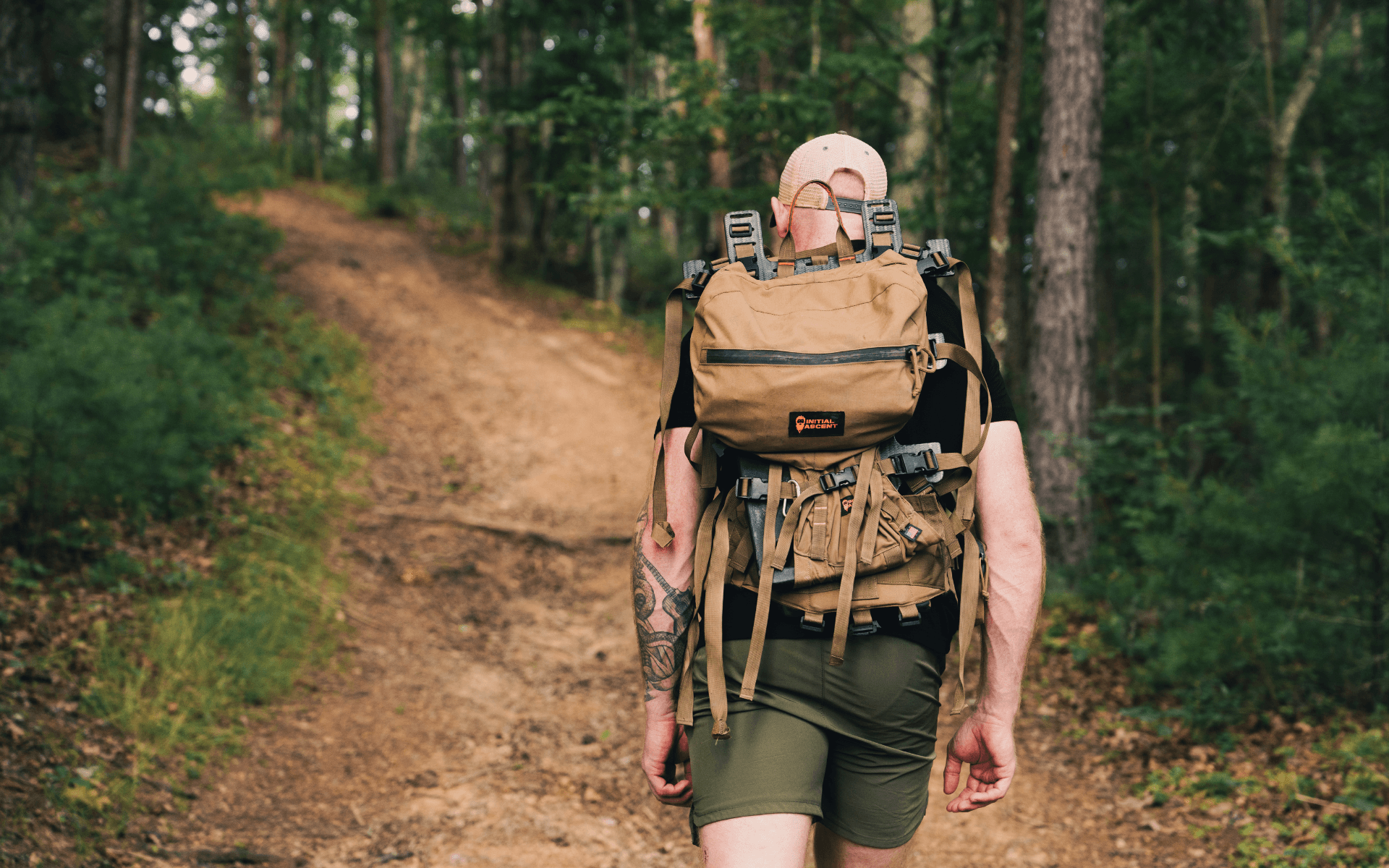
Our Backcountry Ready and Pathfinder members are currently doing one or two uphill Zone 3 sessions per week. (Zone 3 is the highest intensity that still allows for significant aerobic contribution.) They’re loading their packs with anywhere from 20% to 30% of their body weight, and walking on steep inclines. This party goes down on either the incline treadmill, stairclimber, or on terrain.
This moderate-intensity, relatively heavy work is perfect for building uphill muscular endurance. The load from the pack combined with the uphill stride and pace recruits slow-twitch and fast-twitch muscles. The extended work period improves their endurance, making them fatigue resistant on long, hard uphills.
It makes sense to do this work now because it builds raw materials. Later in the summer, we’ll ruck and hike without concern for staying in exact intensity zones. But we need the foundation to get the most out of that work.
Strength Training in June: Maintain and Get Specific
Zone 3 muscular endurance training is our main priority this month. That means strength training goes into maintenance mode. You can’t try to move all aspects of fitness forward at once and expect something good to happen. It stresses the body too much, and fatigue replaces fitness. That’s a real bad thing to do this time of year.
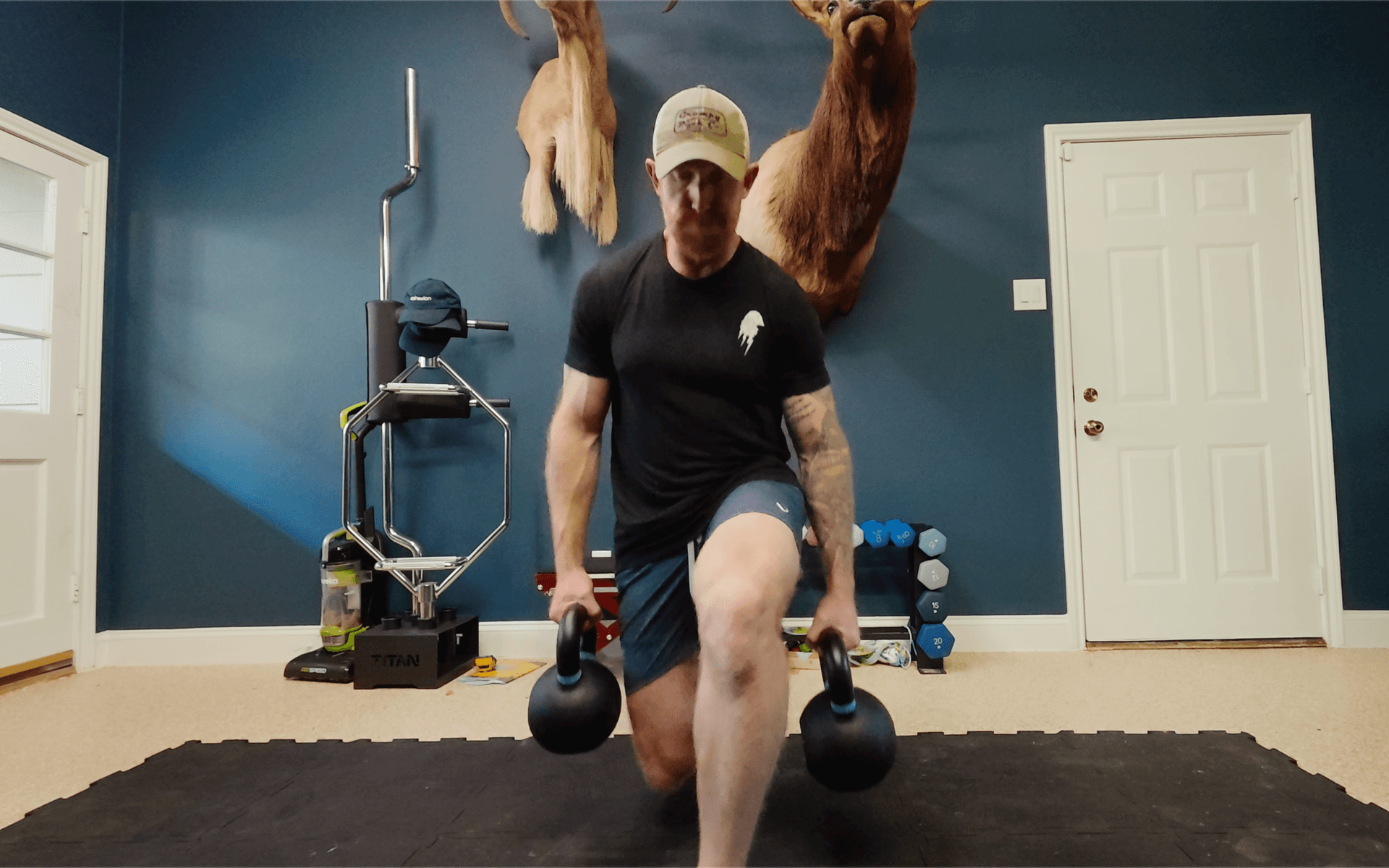
So, we cut strength work back. We do two strength workouts per week. One includes a heavy squat and heavy row. The other day is all unilateral (single limb) training. It’s just enough training to keep strength in a good place while pushing muscular endurance forward.
The unilateral day also includes exercises that train the legs to handle specific mountain movement demands. Forward lunges to prepare for downhills. Single-leg RDLs to prepare for uphills. Once you build general strength, you have to start applying it in ways that prepare your body for mountain stressors. Otherwise, you’ll be strong but your legs will still get the hell kicked out of them.
Power Training in June: Building Resilient Springs
Power training in general is too often neglected by hunters. That’s sad. It’s important for longevity, improves coordination, and gives you faster access to your strength. This time of year, it’s best used to build resilient quads and calves.
During our heavy strength day, we pair a goblet squat isometric hold with repeated vertical jumps. Not only does this combo improve your ability to repeatedly produce power, it also stresses the quads in two ways that make them more resilient for downhills.
We build spring during our unilateral training day. We do that with 1-foot rebound jumps. These puppies build resilient feet, ankles, and calves. Improving lower-leg spring also saves you energy. Each step you take costs you less because your foot is more reactive when it hits the ground. This is crucial. We take a lot of freakin’ steps throughout the course of a day’s hunting.
Mobility and Core Training in June: Joints Making Mountain Movements
We never stop working on general mobility and core strength. It takes consistent, year-round effort to keep your body moving well and maintain joint health. Every warm-up we do begins with mobility and core training. However, we have to translate the general work into specific mountain mobility and core strength that keeps you sturdy under your pack.
Think about how we move while hunting. We step over logs and up onto boulders. We duck under limbs and crawl to get into position. Consider how our ankles get carpet bombed by terrain. They twist and turn as our feet land on the roll and slope of odd shaped rocks. Fail to prepare for all of that and you’ll waste energy with inefficient movement while setting yourself up for injury.
We specifically train our hips and balance for big steps with movements like bench step overs. Our ankles get bullet proofing with standing two-foot ankle CARs. They work because they use general mobility and stability to replicate movements in the field.
Whether you realize it or not, your pack is constantly rotating on your body. It’s trying to pull your shoulders to your ass; it’s trying to bend you to the side; it’s trying to turn your shoulders. You must build mid-section rigidity to fight all that. Unilateral strength training helps a ton. However, dedicated core core exercises are necessary for full preparation.
Here’s the thing, the core exercises don’t look exactly like wearing a pack. But they build the raw materials that give your core the strength it needs to fight your pack. Exercises like ½ kneeling kettlebell lifts are a great example. They train your core to fight rotation while staying upright.
Aerobic Training in June: Maintaining Your Base While Prepping for Long Hikes
At this point in the year, we’ve improved our aerobic system by doing a lot of Zone 1 and Zone 2 training. The goal shifts from building to maintaining while ensuring aerobic durability for long hunting days. To do that, we focus on one, long aerobic session per week.
It lasts between 90 to 120 minutes. Our folks can hike, do a light terrain ruck, or jog for this session. I’ve been hiking for this session to give my back a break from my pack. We need these longer workouts so that our aerobic system gets enough training volume to maintain its efficiency while also improving its ability to work across time. Most of our Backcountry Ready folks hit between three and four hours of aerobic training per week during the first five months of the year. It takes about half the volume used to build the system to maintain it, so one 90- to 120-minute session is perfect. We also fuel these workouts with carbs to improve performance and promote recovery. You still get better at using fat for fuel while eating carbs during long workouts. Session duration and total training volume are the biggest factors for improving fat fueling efficiency. If you hear someone saying otherwise, ignore them. The research is clear.
Earlier, I mentioned that our members have the option of doing two Zone 3 uphill sessions per week. There’s also an option for folks to do a Zone 2 session in place of the second Zone 3 session. It’s included for folks who did not accrue enough aerobic volume during the previous training blocks. They need to get the Zone 3 work in for muscular endurance, but they also need to continually accrue aerobic volume.
There’s also the option for a couple of short Zone 1 sessions. They’re included to help promote recovery and for those who want to keep accruing aerobic training volume.
Structuring a Training Week in June
Weekly training structure matters. You have to put the right training sessions in the right places to get the most out of each aspect of you’re training.
Here’s our weekly structure in June:
Monday: Zone 3 Uphill Intervals
Tuesday: Heavy Strength
Wednesday: Rest
Thursday: Zone 3 Uphill Intervals or Zone 2 Uphill
Friday: Unilateral Strength Training
Saturday: Long Aerobic Training
Sunday: Rest
Building uphill muscular endurance is the main priority, so we start the week with it and make it the first session back after the mid-week rest. Strength follows after because we need it, but it’s in maintenance so it’s okay if we’re a little fatigued during that session. The long aerobic session is at the end of the week because it’s also in maintenance, plus that’s when most folks have the time to do it.
Start Your Preseason Training Strong by Training Smart in June
Improving uphill muscular endurance is the early preseason’s main priority. It should be your focus. But you can’t dismiss every other aspect of mountain fitness. Maintain your strength, train for mountain mobility, and ensure that your aerobic system has the necessary durability for long hunting days. Do all of this in June and you’ll set yourself up for a killer preseason train up.
If all this makes sense to you, but you want to save the time and energy of figuring it out on your own, sign up for Backcountry Ready. Not only do you get the best hunting fitness program in the business, but you get the decision-making, coaching, and customization that comes from a hunter with the education and 20 years of human performance experience. Results are guaranteed or you get your money back. Don’t leave your season up to chance. Sign up and get the confidence that comes with knowing your body is ready to go the distance.