Fitness Tips
How Hunters Should Train in July
July is a big training month for hunters; a lot hangs in the fitness balance. We’re six to eight weeks from when most seasons kick off, cruising right into the final training phases before boots start pushing dirt. Friends, we can’t dilly dally with our training this month. It must be wise and dialed in. So, what kind of training is wise right now? Well, to answer that, we have to look at what we need in order to be prepared.
Heavy pack acclimation, long sessions under load, a resurgence in strength, and specific hunting movement prep are all in order to have you conditioned for hunting season. That makes July a training transition month. We progress past early preseason conditioning and begin the march to late preseason. Some important hunting fitness qualities must be restored while others get built.
Let’s walk through how hunters should train in July to get it all done.
What Every Hunter Wants: Heavy Pack Acclimation
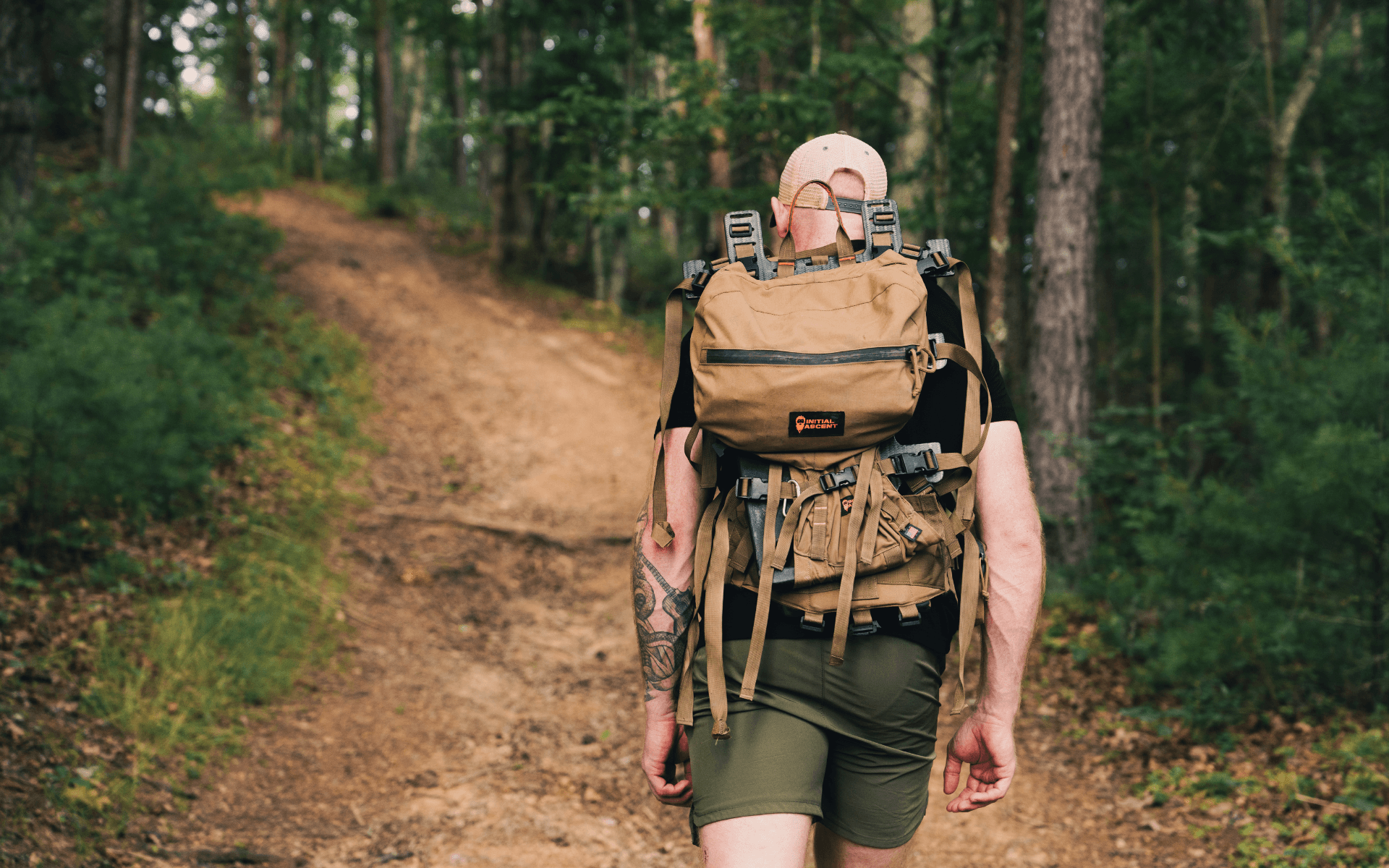
While too much heavy pack training is a recipe for a hip, knee, or back problem, it is important to get some time under a heavy pack. It gives you confidence that “you’ve been there before” should you find success and have some heavy walking on the docket. It’s also a chance to condition your frame to support heavy weight while building muscular endurance. You just can’t be all willy-nilly about it. And you need to do it in a controlled environment.
Our Backcountry Ready and Pathfinder members started doing heavy HICT step-ups in June and have carried them into the first half of July. However, the volume was low. The longest set was 15 minutes. During the back half of the month, we’ll increase the volume of heavy HICT step-ups to give our legs more muscular endurance work while acclimating to heavy packs in a safe environment.
We do them on a 12-inch box with up to 45% of our body weight in our packs, taking one step up every 4 to 8 seconds. Twelve inches is the perfect-sized step to prep for mountain travel, while maintaining the relatively slow pace mitigates problems caused by too much fatigue. The heavy weight bolsters our frames while building muscular endurance in our fast-twitch muscle fibers.
Strength Trade: Endurance for Heavy Maintenance
The best training plans progress in cyclical waves. You build one quality with increased volume and intensity. Once that’s done, you move it to the back burner while you give another important quality more gas. That’s what we’re doing as we transition from building strength endurance to giving heavy strength training enough love to ensure it’s there when we need it this fall.
We do our big blocks of heavy strength building early in the year and late in the year. In between, we touch on it a couple of times to maintain our injury resilience and to prime our nervous system so our strength gains don’t fade. Staying strong helps us save energy in the mountains. Since we made a good strength push earlier this year, it doesn’t take much training volume to maintain it. Plus, we sandwich it between two blocks of strength endurance training. We’ve trained to use our strength for longer periods and repeated efforts, now we prime the system to get more out of it before we go back into more strength endurance training.
Our heavy lower-body lifts will be squat-focused. Squatting variations have the most carryover to uphill and downhill travel. Specificity matters at this point in the year. Deadlifts are cool, and sometimes necessary, but they don’t give you mountain wheels like squats do.
We’ll do low-volume, heavy lifting once per week as July moves on towards August.
Something Every Hunter Needs: Specific Hunting Movement Prep
Muscles and joints need specific prep to handle all of the awkward steps, turns, rolls, and shuffles we do in the field. This work keeps you from beating the hell out of yourself on the mountain. It also helps get you out of some binds and just might prevent you from playing an unsanctioned game of first one down the mountain.
This means you need to do some strength and mobility training that either prepares your joints for awkward positions, or puts you in awkward positions that require strength to navigate. Sometimes the movements truly look and feel awkward. Other times, they build the raw materials so you have the gusto to handle chaos. The combination bullet proofs you against the unavoidable chaos the backcountry dolls out.
We’ll step over, under, and across with lower body strength movements. We’ll get up off of the ground from weird spots. And we’ll build core strength that helps us manage all of it. We’ll also focus on ankle, hip, shoulder, and spinal mobility that replicates how these joints deal with stress in the field.
Downhill prep also fits into this equation. We’ll include some in our conditioning, but we’ll also do lunge and step down variations to prepare our quads for spicy descents.
The Conditioning Flip Flop
There’s an old Chinese proverb that says, sometimes the longest foot is the shortest mile.
I’ll let you think on that for a second before admitting that I just made that up.
Truthfully, though, we are flip flopping our conditioning approach. During the early offseason, we did short(er) specific conditioning sessions and long(er) general conditioning sessions. Short, heavier incline rucks throughout the week combined with long, general aerobic sessions on the weekends.
Those shorter incline ruck sessions built resiliency while conditioning our legs to handle long terrain rucks. And since hunting is essentially a string of long terrain rucks, we need to start doing more of them. So, we’ll transition to long terrain rucks on the weekends. We’re talking two-hours plus, up to all day outings, should the time be available. It’s also a great time to get in overnight scouting trips as part of your training.
During the week, we’ll do general aerobic training paired with some higher-intensity conditioning as the summer rolls on. This gives us enough conditioning volume to keep our legs and lungs ready for the mountains while also mitigating the stress of long terrain rucks so we don’t walk ourselves into overuse injuries.
Train Smarter in July
We’re in the final push towards hunting season, so each training week counts. It’s time for heavy pack acclimation, strength boosting, awkward movement prep, and long terrain rucks. This is the stuff that prepares us to go wherever we want in the mountains come September.