Mountain Hunting
The Anatomy of an Extraordinary Hunt: Why Exceptional Experiences Demand a Higher Standard of Preparation
Still going strong heading into day 9. Blisters have subsided and headed over a pass in the AM to try and find one they saw first hunt a few weeks back.
It was an inReach message, sent to me by a client from the crags of the Mackenzie Mountains in Canada’s Northwest Territories. He had covered 100 miles on foot up to that point, up and down ridges, across scree fields, and through creeks in North America’s most rugged terrain. He would cover 10 more through the pass he mentioned in his message. It would be 24 hours, at the end of shooting light on the last day of his hunt, before he’d press the trigger and kill a beautiful Dall ram.
“Love to hear it man. You’re earning this one, haha. Go get him!” I replied knowing he had the mental, emotional, and physical gas to go get it done, hoping that a mature ram was waiting for him at the end of another long hike.
Earn it, he did.
Along with the days’ long treks through foot-shredding terrain that made five other hunters quit while he was in camp, his glass was rendered useless during the first week. For seven days, the mountains were socked in with fog, clouds, and rain. The physical strain, the lack of visibility, all of it was enough to wear a tough man down and leave him dejected. But on he pressed with a head square on his shoulders.
Morning. Finally got some sunshine to start day 7. So feeling good about today. Headed to a knob that they have killed rams on in the past and overall feel good.
His messages kept this upbeat tone throughout the hunt, never a break in his mental or physical stride. Looking back from the future, we know that no ram was waiting for him on that knob. He’d endure three more days of struggle before ditching the inReach to send me an iMessage from base camp. It was a series of grip and grins of him perched on a mountain side with the ram he’d worked so hard to bring to his possession.
That hard work started months before the bush plane dropped him off in camp. And it took a lot more than hours on the stairclimber and dumbbells thrusted skyward to make it all come together. None of it happened by accident.
It started with the hunter.
Investment in an Extraordinary Hunt
Awe. Determination.
That was his answer when on one of our calls I asked him what words he wanted to define his time spent so far from Texas, away from his family, away from the work that provides them a good life. His word choice is telling. No one leaves for a hunt wanting to come home empty handed. We all want the gratification of walking up on an animal and watching it get bigger as we get closer. And mountain hunting is expensive. The financial cost of the ante up can loom shadow-like while waiting for an opportunity. But hyperfocusing on putting an animal down while tallying the costs causes a hunter to miss the biggest investment in an extraordinary hunt.
It’s the investment of yourself. It’s knowing why you’re going and what would make the trip a success even if you never pull the trigger. The mountains are unforgiving and the animal always gets a vote. If you're hounded by thoughts of bullet meeting flesh and the money wasted if that doesn’t happen, you won’t have the foundation necessary to deal with setbacks. There’s a good chance the situation you want to avoid becomes the one you live through. You’ll find the experience feels more like a burden than a blessing.
My client set his will on experiencing awe and feeling determination, not on killing. While they might sound like a couple of nice words scratched on paper or some kind of inspirational bullshit, they were practical and profitable. Wanting a sense of awe kept his eyes on the horizon instead of on his own feet. It kept him present. Determination kept him in the mountains. It got him out of the tent on rainy mornings; it moved his feet over that mountain pass on day 10 without certainty that a ram was waiting for him on the other side. What’s more, those words were his guides throughout the entire preparation process.
We had the conversation that conjured those words at the beginning of our training relationship. Before he pushed himself through strength endurance sessions that had him lift heavy weights more times than he thought he could, before the hours-long pack sessions on the stairclimber. Those words set the foundation for doing the work, day in day out, week in week out, month in month out. They gave him the center to do what was necessary.
There is, of course, no avoiding the financial investment in an extraordinary hunt. But that only gives you permission to play. The real investment is in yourself. It’s in taking the time to sort out why you’re going up the mountain in the first place, and in what you want to experience while you’re there. Not only does it allow you to define success in your own way, it makes it far more likely that you’ll find a horn in your hand before it’s time to go home.
You’ll find the drive to do the physical work before the journey begins. You’ll have the drive to stick it out when other hunters are packing it in.
The Work: It Must Be Specific and It Must Fit You
Being in decent shape is a good thing. It’s where my client found himself when we started working together. He’d intermittently lift some weights. He’d go for a run or two with the family dog. That’s important and helpful at the beginning of a mountain hunt train up for a couple of reasons. First, there’s a set of established habits to build on. Second, there’s at least somewhat of a fitness base to also build on. It is, however, only the beginning. General fitness must be expanded on and converted into terrain fitness, and it must be done via a process that meets you where you’re at, gives you what you need, and has you confidently ready to cover 10 miles per day or more in volatile country.
To do this, we expand general physical capacities and then turn them into specific mountain abilities. Here’s a look at those capacities and why they matter.
Capacity | Why It Matters |
Aerobic Endurance | Sustained movement, recovery, ability to repeat work day after day |
Strength and Muscular Endurance | Saving energy, uphill climbs, descents, carrying a heavy pack |
Mobility/Movement Capacity | Balance and control on terrain, saving energy, preventing bodily breakdown |
The important part comes next—testing. We need to know which capacities are weak, which are strong, and the best course of action for developing each that works within a hunter’s weekly schedule. We also need to use the training methods that meet the hunter where they’re at while moving them toward specific preparation for their hunt. On top of that, we have to consider the time until wheels up.
When I tested the client in this story, I found that his strength was behind the curve, his aerobic system was average, and that he moved well. We had six months to prepare him for his strength hunt, and his weekly schedule was stacked, including a lot of travel. So, we started with a few months of heavy strength training before converting it into strength endurance and muscular endurance. Since we only had six months, and he traveled a lot, we did most of his conditioning on the incline treadmill and stair climber. He needed the uphill work, and he could find a treadmill at any hotel gym. We progressed from unloaded incline work to a combination of heavy, shorter pack sessions and light, longer pack sessions to build specific aerobic endurance and muscular endurance for moving in the mountains.
The process gave him the fitness he needed to cover over 100 miles in brutal terrain. It worked because we took general physical capacities and turned them into specific mountain abilities. Generally being “in shape” doesn’t work for mountain hunts. You have to train to prepare for terrain.
The Confidence to Know You Can Go
Confidence in the mountains is a balance between exposure and humility. Lean too heavily in one direction, especially towards exposure, and you walk yourself into a trap.
I’ve seen exposure without humility bite folks right in the hind parts, especially guides. They’ve been up and down the mountain so many times, they just “know” they can do it. Then they fail to take care of themselves in the offseason, “all of a sudden” their body breaks down or a climb they think they’ll crush, crushes them. You must show yourself you have the chops while always remembering there’s more work to be done.
Consistently putting in the fitness work goes a long way towards enameling your confidence. But the full solidification is more nuanced and specific. It requires getting clear on where you’re uncertain, and then approaching the uncertainty. Long climbs under a heavy pack are a solid example. Uphills concern a lot of hunters because they don’t have the exposure, on the mountain or in training, to settle the uncertainty. So, they need experiences they can bank on. For example, nailing a two-hour stairclimber session while carrying your load out on your back goes a long way towards settling your guts. However, you have to nail it. That means you have to progressively build up to it. Otherwise, it’ll crush you and kill your confidence. You have to approach the things that worry you, and you have to do it in an intelligent, systematic way.
Examples exist throughout training. Loading more weight on the bar for front squats tells you that your legs and core are a trustworthy foundation. Feeling your balance improve lets you know you can manage gnarly terrain. Watching your heart rate stay down while you move faster shows you that your endurance will carry you day in and day out.
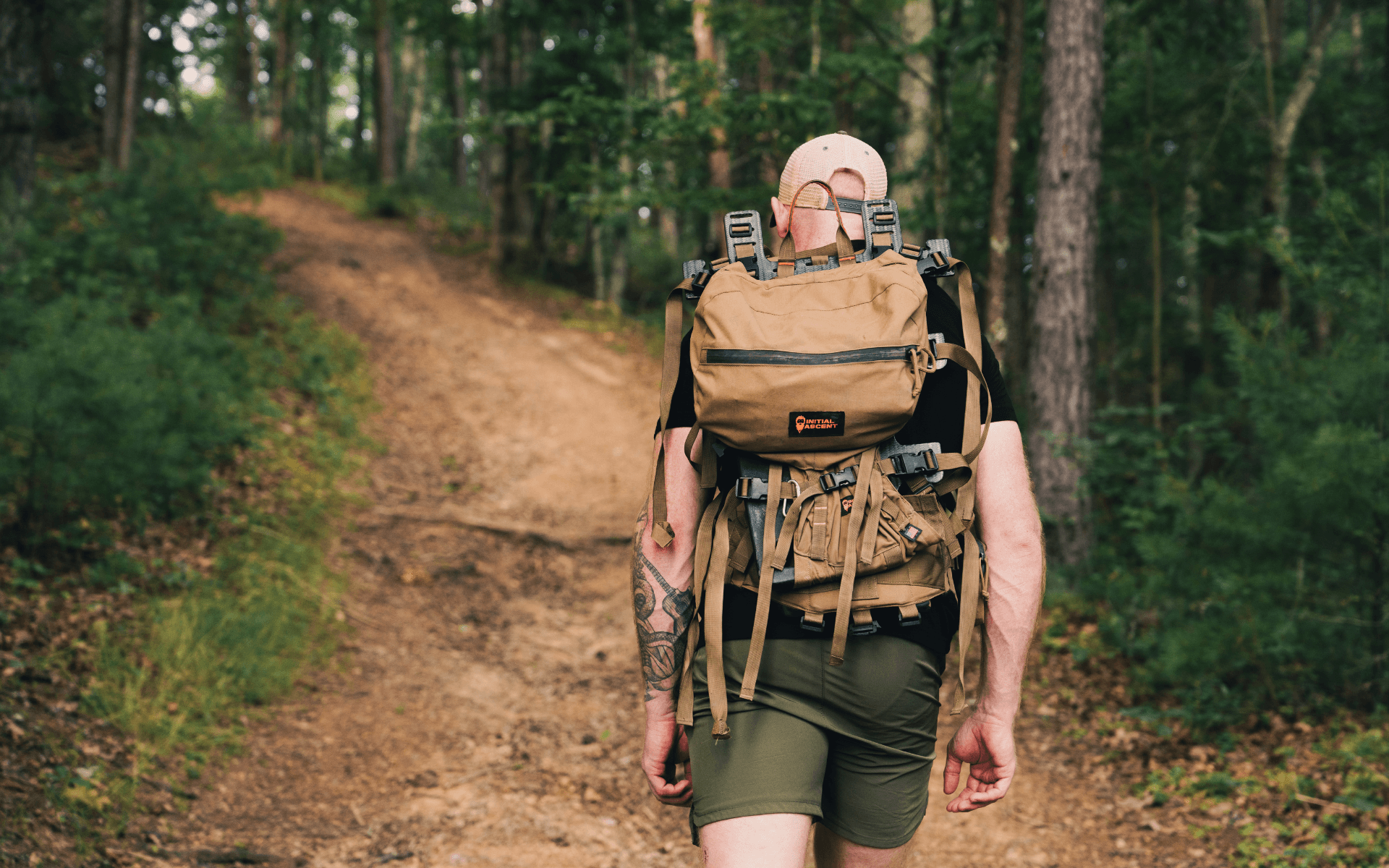
Confidence in your body is imperative, but it doesn’t stop there. Confidence in your equipment is also necessary. The client I’ve mentioned throughout this article was unsure about his pack when we first started training. It wasn’t very comfortable, and the more he loaded it the worse it got. So, I guided him into a new pack system, one I’ve used for years. He trained in it, got to know it, and felt great underneath it. The upgrade and training eliminated several worries. The comfort of the pack, even while it was loaded down, let him know he could carry heavy weight for a lot of miles. The durability of the pack showed him that it wouldn’t betray him when he needed it.
Training and controlled gear tests are important. But sometimes you do just need guided exposure to overcome your weak points. That’s why I offer offseason backcountry trips to my APEX clients. Another client struggled with his footing and balance in terrain on a sheep hunt. So, I took him on a high country fly fishing trip to Colorado. Not only did he enjoy the time away and the relaxation in the wilderness, but I diagnosed the issue and developed a plan for overcoming it. Now, he has more terrain experience and the confidence that his feet are headed in the right direction.
We can’t forget that this must all be tempered with the humility of remembering that you’ll lose your abilities and your confidence if you don’t continue to do the work. That’s why we train year-round, regardless of what hunts are on the calendar.
Progress In Spite of Constraints
The life that provides the resources for mountain hunting is also one of preparation’s biggest obstacles. My APEX clients are prosperous. They’ve either worked hard to build businesses or to rise in the ranks at successful corporations. They also have families. Their weeks are filled with client meetings, travel, staff management, kid’s sporting events, and all the other accoutrements of a thriving life. Time constraints and decision fatigue are daily realities. So, instead of crafting the “perfect” plan that’s impossible to execute, we plan for what is executable within the constraints of weekly life. We also take decision fatigue off the table. The combination creates an environment where they make progress in spite of constraints.
Let’s illustrate this with a business allegory. Inconsistency is most often an operations issue. Either the SOPs aren’t clear or those carrying out the business functions are trying to execute at a level above what constraints will allow. But when the SOPs are dialed and execution is aligned with constraints, you get a consistent product.
Applying this to APEX, I’m the Ops manager for each client’s training, nutrition, and lifestyle. I set the SOPs (a 90-day training, nutrition, and lifestyle plan) by first gaining an intimate understanding of each client’s work and life. The plan fits within their constraints. All they have to do is execute.
I also manage decision fatigue by coordinating with their staff to get ahead of their schedules. I modify their workouts for travel, look ahead at restaurant menus to offer meal choices that align with their nutrition plan, and vet and coordinate any outside specialists they may need. Again, all they have to do is execute.
This approach of working with constraints while using me as a central hub operations manager allows for year-round progress that keeps them ready for their hunts and allows them to perform better in everyday life.
Staying ready becomes an easy box to check instead of a burden. That’s why our APEX maxim is “Exceptional Performance. Minimal Complexity.”
Preparation is a Coordinated Process
For everything to work, everything must fit.
The mental investment must align with the physical work. Nutrition must fuel the specific workouts while keeping weight in check. And it all must work within the confines of a busy life. Plus, schedules are often in flux. Every plan needs oversight that includes room for modifications and adaptations. I build a simple cycle to keep everything coordinated and adaptable.
01 Assess Establish capabilities, constraints, and demands | 02 Plan Build a strategy that meets objectives while accounting for reality |
03 Execute Act while adapting training, nutrition, and support to real life | 04 Reassess Use results, testing, and experience to refine and update the next plan |
We don’t just look at the calendar. We respond in real time to the information that’s in front of us. That’s what makes progress possible and exceptional performance attainable.
I ask:
Where do we need to be by the time they ship out?
What do we need to execute right now, and how do we make it fit with their life and schedule?
How do I make it all as simple and executable as possible based on what I know about them and their current situation?
Then I set them up for success with all of the coordinated pieces falling into place, from nutrition and training to dialed in gear to the certainty that their mental game is locked in.
Arriving and Staying Ready
My client didn’t know he’d spend a week wet and waiting for the chance to glass sheep. He didn’t know he’d cover over 100 miles before lying down behind his rifle. But he did know that because he executed the right work at the right times, he was ready for it all.
During our after action phone call, I asked him if he met his goal of feeling awe and determination. He told me that he felt it every day. He defined success his own way, worked to achieve it, and it led him to the traditional definition of mountain hunting success—coming home with a beautiful animal and a lifetime’s worth of memories.
Now, we’re prepping for the next mountain.
Click the link below to apply for Packmule APEX:
Packmule APEX Application